
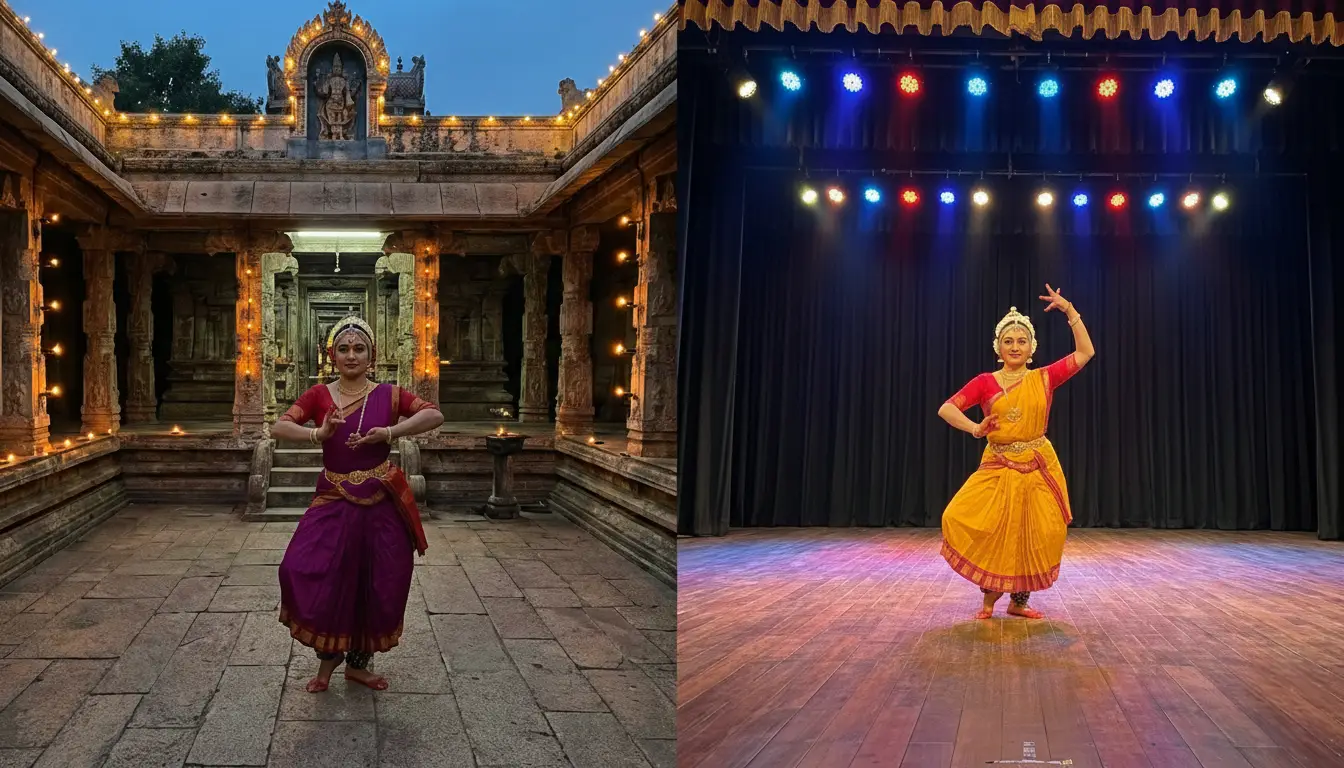
When people ask me which performance is more difficult — a temple performance or a stage performance — my honest answer is: they are both demanding, but in completely different ways. And if you are a trained classical dancer who has done both, you will know exactly what I mean.
The preparation for each is not just about knowing your choreography. It goes deeper — into your mindset, your body, your relationship with the space, and even your costume and makeup choices. Let us break this down, properly.
The Soul of the Space
In a temple performance, you are not performing for an audience in the conventional sense. You are performing for the deity. Bharata Muni’s Natyashastra itself treats the performance space as a dwelling of gods — the Rangadaivata Puja described in Chapter 3 involves worshipping the deities enshrined on stage, and the entire ritual is conceived as a Yajna, a sacred offering. This changes everything about how a dancer prepares internally.
On a proscenium (picture frame) stage, the dancer performs to an audience seated in front. The visual grammar, the projection of expressions, the energy — all of it flows outward, toward the house. In a temple, the energy flows inward and upward, toward the deity. This is not poetic language. It is a real shift in the dancer’s intention, and it changes what she rehearses for.
Ritual Preparation Before You Even Step In
For a temple performance, your preparation begins well before the green room. There is a personal sadhana — a bath, often before dawn, wearing only specific colours, avoiding non-vegetarian food for a day or more. Many dancers doing temple performances observe a complete fast or eat only sattvic food.
The Bhoomi Pranam — touching the earth and seeking forgiveness for stamping upon her — is not optional here. It is the foundation of the entire performance. The Natyashastra prescribes that before performance, the stage is purified with holy water and chanting of mantras. In a temple, this purification has an additional, deeper layer — you are entering sacred geography
For a stage performance, the preparation is more logistical. Sound checks, lighting rehearsals, understanding the dimensions of the proscenium, coordinating with musicians and lighting designers — all of this is part of the standard prep. A stage dancer must know which lights will wash out which expressions and adjust her abhinaya projection accordingly. You cannot see that challenge in a temple courtyard where oil lamps provide a natural, warm glow.
The Body Speaks Differently
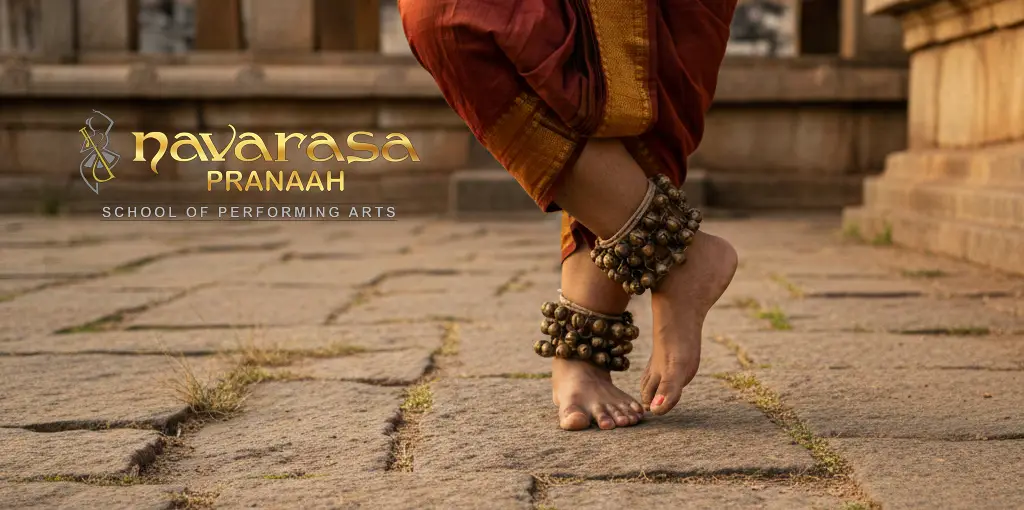
Here is something very practical that most people don’t talk about. In a temple, you are usually performing on a stone floor — sometimes uneven, sometimes wet with earlier rituals. Your body has to adapt constantly. The adavus feel different on stone than they do on a polished wooden stage. Your footwork has to be cleaner and more controlled because there is no microphone under your feet capturing the beats — the sound travels differently.
In a stage performance, the proscenium demands a very different spatial awareness. The stage space in the modern era is much larger than what classical dance was originally designed for. This means your movements, your use of space, your travel — all of it has to be amplified. The intimacy of the temple is replaced by the need to “fill” the stage. A dancer who has only trained for temples can look lost on a large proscenium. A dancer who has only trained for the stage can look over-projected and aggressive in a temple setting.
Costume and Makeup: Not the Same List
For temple performances, the costume is more traditional and less theatrical. The jewellery is mostly temple jewellery — often real gold or silver — because it is an offering. Heavy stage makeup, especially foundation and dramatic highlights, is usually avoided because the dancer is in proximity to the deity. The makeup must be clean, devotional.
For stage performances, the lighting changes everything. Kanjivaram silks, tarakasi jewellery, and brocade costumes are specifically designed to interact with stage lights and shimmer for the audience seated far away. Makeup is exaggerated — the eyes especially — because facial expressions must read from the last row.
Mental Preparation: Two Different Inner Worlds
Rukmini Devi Arundale, who adapted Bharatanatyam from temple tradition to the proscenium, had to consciously redesign both the repertoire and the mental framework for stage audiences. That tells you how different the two are.
For a temple performance, the dancer’s mental state is that of a bhakta — a devotee. The navarasas are expressed, but they are in service of the deity’s story. For a stage performance, the dancer steps into the role of a performer — a storyteller who must keep the audience engaged, manage stage nerves, maintain spatial awareness under bright lights, and deliver with technical precision.
Both require discipline. But the temple demands surrender. The stage demands command.
Most dance schools today train primarily for the stage. But any guru worth their name will tell you — until a student has performed in a temple, they have not understood why this art form exists. The Natyashastra says that natya is the fifth Veda, created for all people. It was born in devotion and service.
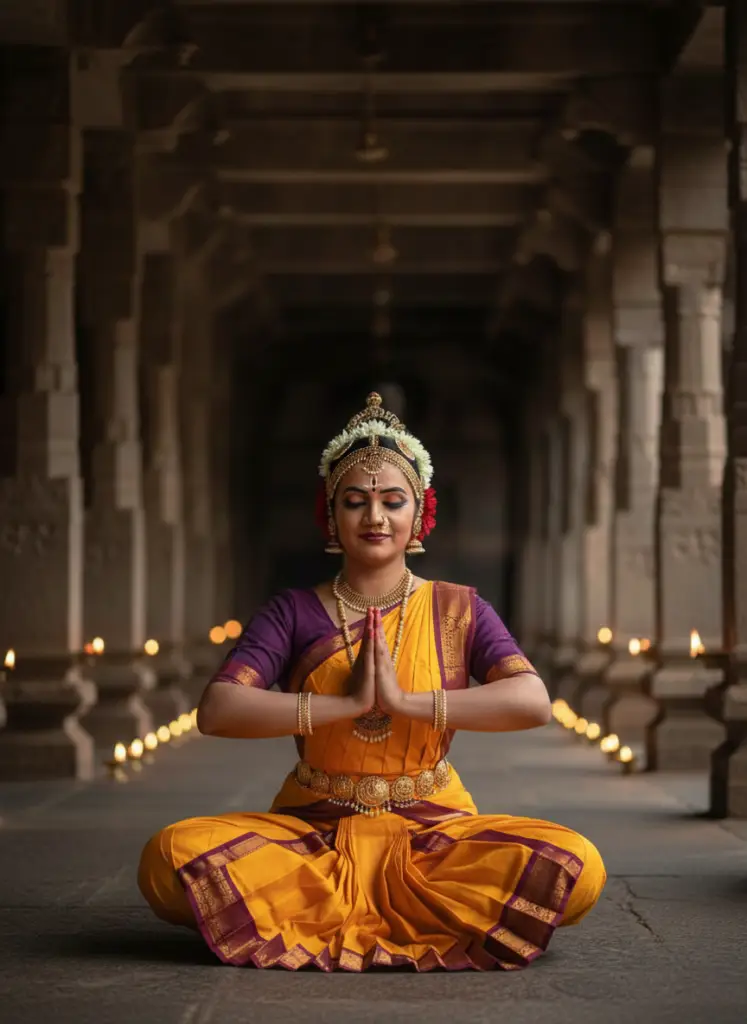
The ideal dancer, truly, is one who can do both — and knows exactly which mode to step into the moment she enters the space. That shift in preparation, in mindset, in body, in costume — that is the real mastery.
Navarasa Pranaah — Where every Rasa finds its Prana.