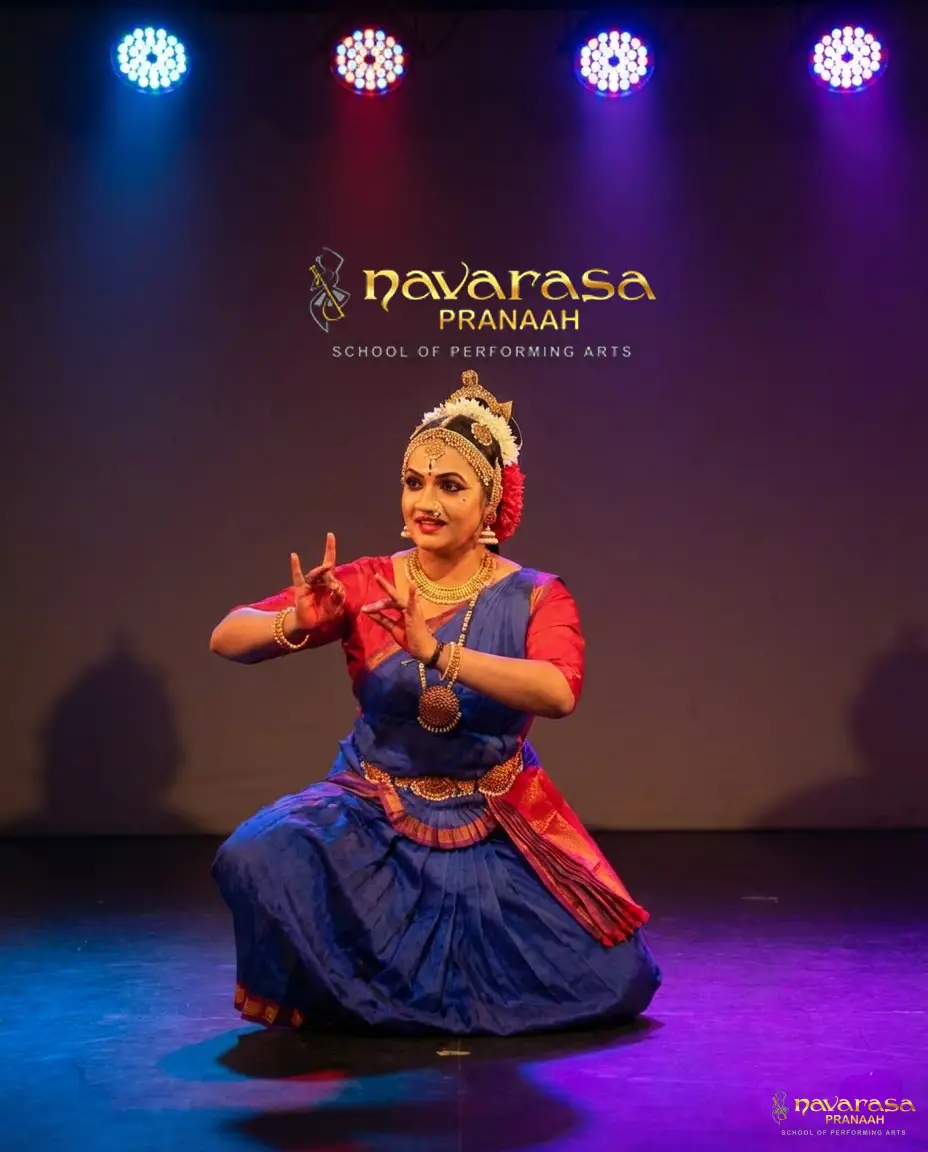
Before you hear a single lyric, before the nattuvangam begins — a hand speaks. One hand, held just so, can name a river, invoke a deity, describe a woman’s grief or a warrior’s pride. That, in essence, is the miracle of the Asamyuta Hastas — the 28 single-hand gestures that form the very grammar of Indian classical dance.
What Is an Asamyuta Hasta?
The word “Asamyuta” literally means non-combined — that is, gestures performed by one hand alone. According to the Abhinayadarpanam of Nandikeshwara, there are exactly 28 such Asamyuta Hastas, each with its own form, name, and a set of meanings codified in verses called Viniyoga Shlokas. The Natyashastra of Bharata Muni — the foundational treatise on performing arts — also catalogues single-handed gestures, with some variations in count across different recensions.
Think of it this way. In any spoken language, you have letters, then words, then sentences. In classical dance, the Asamyuta Hastas are the alphabet. Combine them with Samyuta Hastas (two-hand gestures), with Abhinaya (facial expression), with Angika (body movement) — and you get the full sentence, the full poem.
The 28 Hastas — A Quick Tour
Here are all 28 Asamyuta Hastas, each with their simplest meaning and one striking use:
| # | Hasta | Formation | Core Meaning |
|---|---|---|---|
| 1 | Pataka | All fingers straight, thumb bent | Flag, clouds, wind, river, horse, moonlight |
| 2 | Tripataka | Pataka with ring finger bent | Crown, tree, lamp, arrow, bidding goodbye |
| 3 | Ardhapataka | Tripataka with little finger bent | Leaves, riverbank, banner, flag, knife |
| 4 | Kartarimukha | Index and middle split like scissors | Separation, death, lightning, conflict |
| 5 | Mayura | Thumb and ring fingertip touch, others upright | Peacock’s neck, creeper, stroking hair |
| 6 | Ardhachandra | Pataka with thumb outstretched | Crescent moon, conch, prayer, greeting |
| 7 | Arala | Index finger and thumb curved inward, others up | Courage, drinking nectar or poison, blessing |
| 8 | Shukatunda | Arala with ring finger also bent | Shooting an arrow, farewell, denial |
| 9 | Mushti | All fingers curled into a tight fist | Steadfastness, fighting, holding a sword |
| 10 | Shikara | Mushti with thumb raised up | Manmatha (God of Love), certainty, a pillar |
| 11 | Kapitta | Mushti with index on tip of thumb | Goddess Lakshmi, Saraswati, offering incense |
| 12 | Katakamukha | Index, middle, thumb pinched; ring and little up | Plucking flowers, drawing a bow, a garland |
| 13 | Suchi | Fist with index finger pointing straight up | Pointing, number one, the sun, the city, Shiva’s third eye |
| 14 | Chandrakala | Thumb and index pointing at right angles | The moon, face, Lord Shiva’s crown, river Ganga |
| 15 | Padmakosha | All fingers gently curved like holding a ball | Lotus bud, offering puja, holding a mango |
| 16 | Sarpashirsha | Pataka with palm hollowed downward like a cobra | Snake, offering water, sandal paste |
| 17 | Mrigashirsha | Ardhachandra, palm down, middle fingers curled | Deer’s head, calling someone, a woman, fear |
| 18 | Simhamukha | Thumb, middle, ring fingertips joined; others spread | Lion, elephant, fire sacrifice (Homa) |
| 19 | Kangula | Ring finger fully curled, others straight | Unripe fruits, bells, a bird, young girl’s breast |
| 20 | Alapadma | All fingers spread and gently curved, thumb out | Full-blown lotus, full moon, beauty, yearning |
| 21 | Chatura | Fingers bent at base except little finger, thumb tucked | Cleverness, small quantity, gold, sorrow, sweetness |
| 22 | Bhramara | Index curled, middle touches thumb, ring and little up | A bee, earring, picking flowers, a cuckoo |
| 23 | Hamsasya | Index and thumb touch, middle finger extended | Grace, fineness, blessing, painting, tying thread |
| 24 | Hamsapaksha | Chatura with thumb moved to side of index | Pouring water libation, embrace, the number six |
| 25 | Sandamsha | Index and middle fingers pinched with thumb | Picking, extracting, holding something small |
| 26 | Mukula | All five fingertips meeting at a point | A flower bud, offering, the mouth, a lotus in bud |
| 27 | Tamrachuda | Index and little fingers raised, others curled | A cock, a male bird — animals with a red crest |
| 28 | Trishula | Index, middle, ring finger fanned open, thumb tucks little finger | Shiva’s Trishul, the trident |
One Hand, Hundred Meanings
This is the part that always blows my students’ minds. The same hasta doesn’t just mean one thing — it can mean dozens of things, depending on how you use it.
Take Pataka — that flat open hand. If you raise it to the level of the forehead, it can mean “scorching heat” or “arrogance.” If you bring two Pataka hands down with fingers touching from a Svastika position, it becomes grass on the ground or a shallow pool of water. If you rub the palms of two Pataka hands together, it shows pressing, washing, or even two people — a man and a woman. Same hasta, different movements, different meaning entirely.
This is exactly what Bharata Muni is pointing to in the Natyashastra — the gesture is not a still image. It is alive in movement, direction, and context.
The Viniyoga Shlokas — The User’s Manual
Every single one of the 28 hastas comes with a Viniyoga Shloka — a verse in Sanskrit that lists the approved uses of that mudra. For example, the Shloka for Pataka begins:
Nāṭyārambhe vārivāhe vane vastuniṣedhane…
Which roughly means — at the beginning of a performance, for clouds, in a forest, for prohibition of objects…
These shlokas are not rigid orders. Think of them as a vocabulary list. A good dancer knows them by heart but is not a slave to them. Nandikeshwara himself says — innovate, ensure the performance resonates deeply with the audience.
Why Grammar, Not Just Gesture
We call it grammar because mudras follow rules. The form of the hand is like spelling — it must be precise. The direction the hand faces is like sentence structure — it determines subject or object. The movement is like verb tense — static means description, moving means action. And the facial expression (Navarasas) is the mood, the tone of the entire sentence.
This is why in our school, we never teach mudras as “look at this shape.” We teach students to say something with their hands. A dancer performing Kapitta with downcast eyes and a gentle inward movement is saying “I offer this flower to Goddess Lakshmi.” The same Kapitta, held firmly outward, says “I wield a weapon.” The hand shape didn’t change. The grammar did.
From Natyashastra to the Stage Today
There is a beautiful continuity here. What Bharata Muni wrote down — possibly between 200 BCE and 200 CE — is what our students practice every single day. When a student of Navarasa Pranaah performs Alapadma in a Varnam, they are doing exactly what a devadasi dancer did in a Chola temple a thousand years ago.
But the tradition is also living. Contemporary choreographers are using these same 28 hastas in fusion forms, in Bollywood sequences, in yoga-based movement therapy. The hastas travel across centuries and contexts because they are not culturally specific signs — they are rooted in the human body’s most natural forms of expression.
For the Student — A Practice Note
If you are learning Bharatanatyam, Kuchipudi, or Mohiniyattam, here is something practical: don’t memorise the hastas as a list. Instead, practise each one with its Viniyoga Shloka and say the meaning out loud while holding the form. Your body and your mind will start to connect the shape with the meaning. That is when the hasta stops being an exercise — and becomes a language.
Because ultimately, these 28 hands are not about the hands at all. They are about what you are trying to say. And in dance, if your hasta is honest, the audience will understand — even if they have never studied a single line of the Natyashastra.
Navarasa Pranaah — Where every Rasa finds its Prana.